
Remote Spain 2027
Following Spain’s North Coast
Galicia, Asturias & Cantabria
A DonnaRosa Tour
May 25 - June 10, 2027
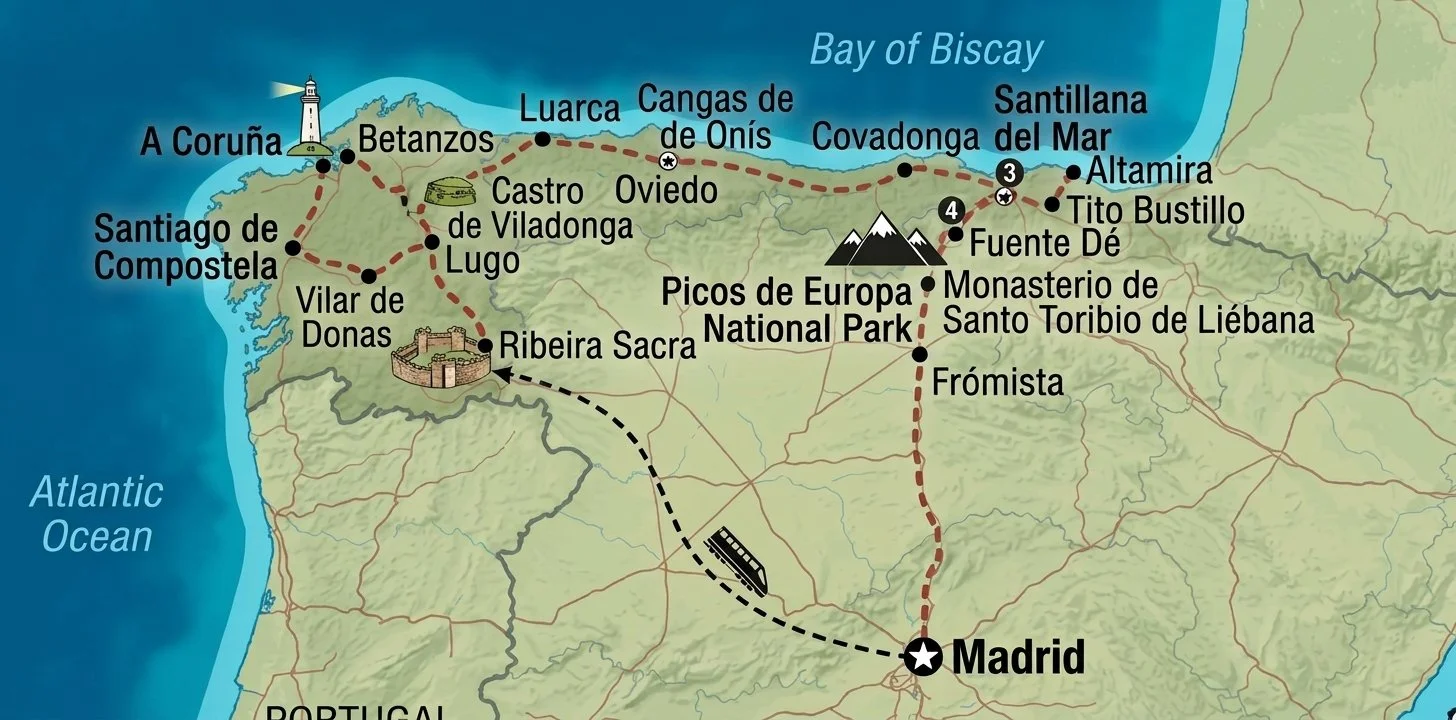
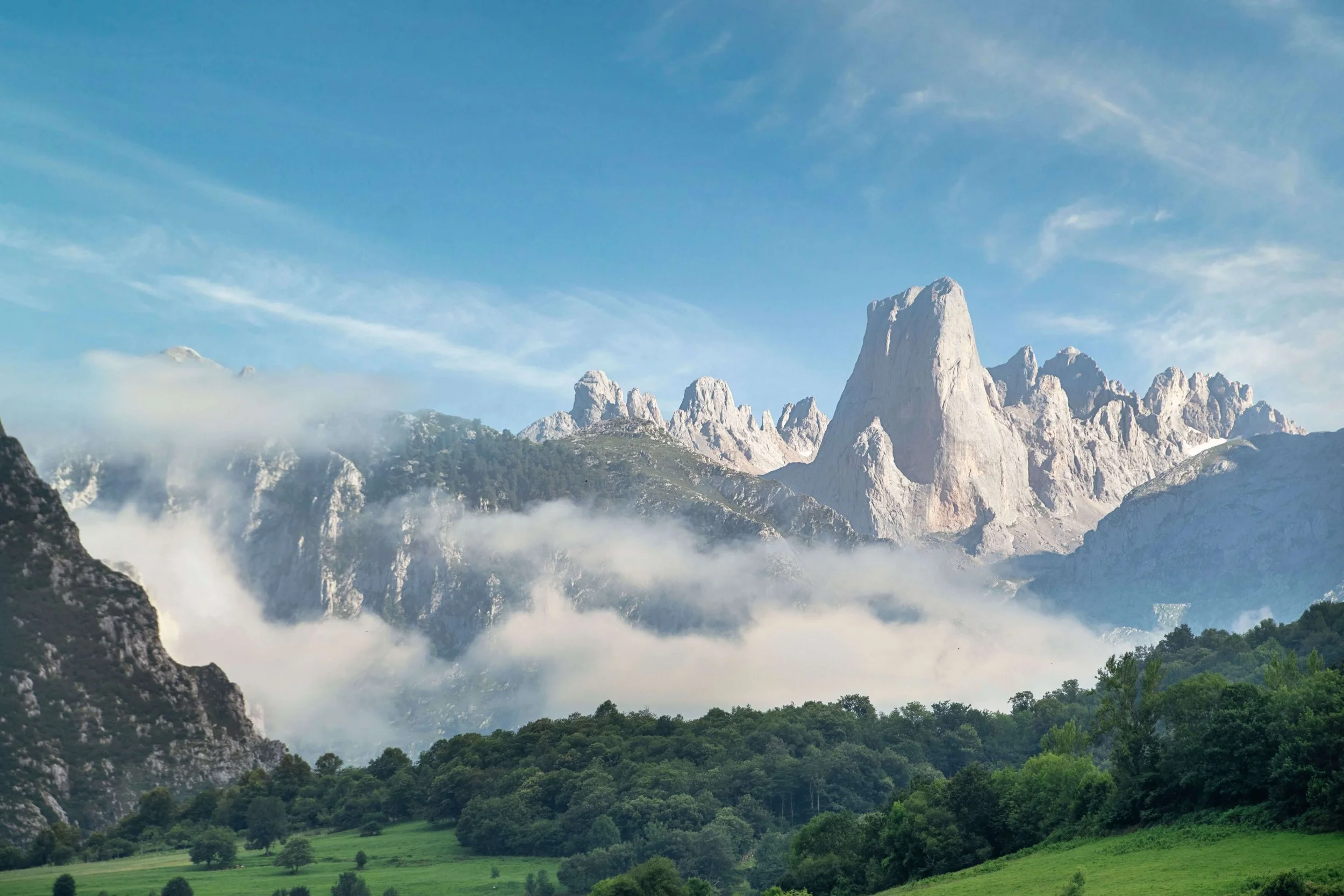
Embark on an extraordinary 17-day journey across the lush landscapes and hidden history of Northern Spain, traveling from the towering limestone summits of the Picos de Europa to the sacred finish line of Santiago de Compostela. Led by expert lecturer Dr. Donna Pierce Smith, this immersive expedition reveals the rich tapestry of "Green Spain" - from world-famous Paleolithic cave art at Tito Bustillo and Altamira to pre-Romanesque Visigothic churches, dramatic river boat rides through heroic vineyards in the Ribeira Sacra, and ancient Roman fortress walls. Retrace the footsteps of history as you parallel medieval pilgrimage trails, savor local cider and heroic wines, and unwind each evening in historic, luxury Paradores and boutique heritage hotels tucked between the Atlantic coast and verdant mountain ranges.
This “DonnaRosa Tour” is the 5th in a series of tours including:
Remote Spain: Following Art & History Along the Duero River
Southwestern Spain
Remote Spain: The Foothills of the Pyrenees
Remote Spain: The Alcarrias, The Alpujarras and Granada


MEET YOUR TOUR LEADERS
Rosa Ramirez Carlson’s passion for exploring new places began in her native Peru and led her to Santa Fe, NM, where her determination sparked a career as a travel agent. This journey inspired her to create Journeys International Inc. a company dedicated to turning dreams of travel into unforgettable, life-changing experiences.
Donna Pierce, former Curator of Spanish Colonial Art at the Denver Art Museum, earned degrees from Tulane University and a doctorate from the University of New Mexico. She has curated at the Museum of Spanish Colonial Art, the Palace of the Governors, and the Museum of International Folk Art in Santa Fe, working with institutions such as the Met, Brooklyn Museum, and MFA Boston. A prolific author, she co-authored Cerámica y Cultura (2003), Painting a New World (2004), Transforming Images (2006), and Cultural Convergence in New Mexico with Robin Farwell Gavin.
Day-by-Day Itinerary
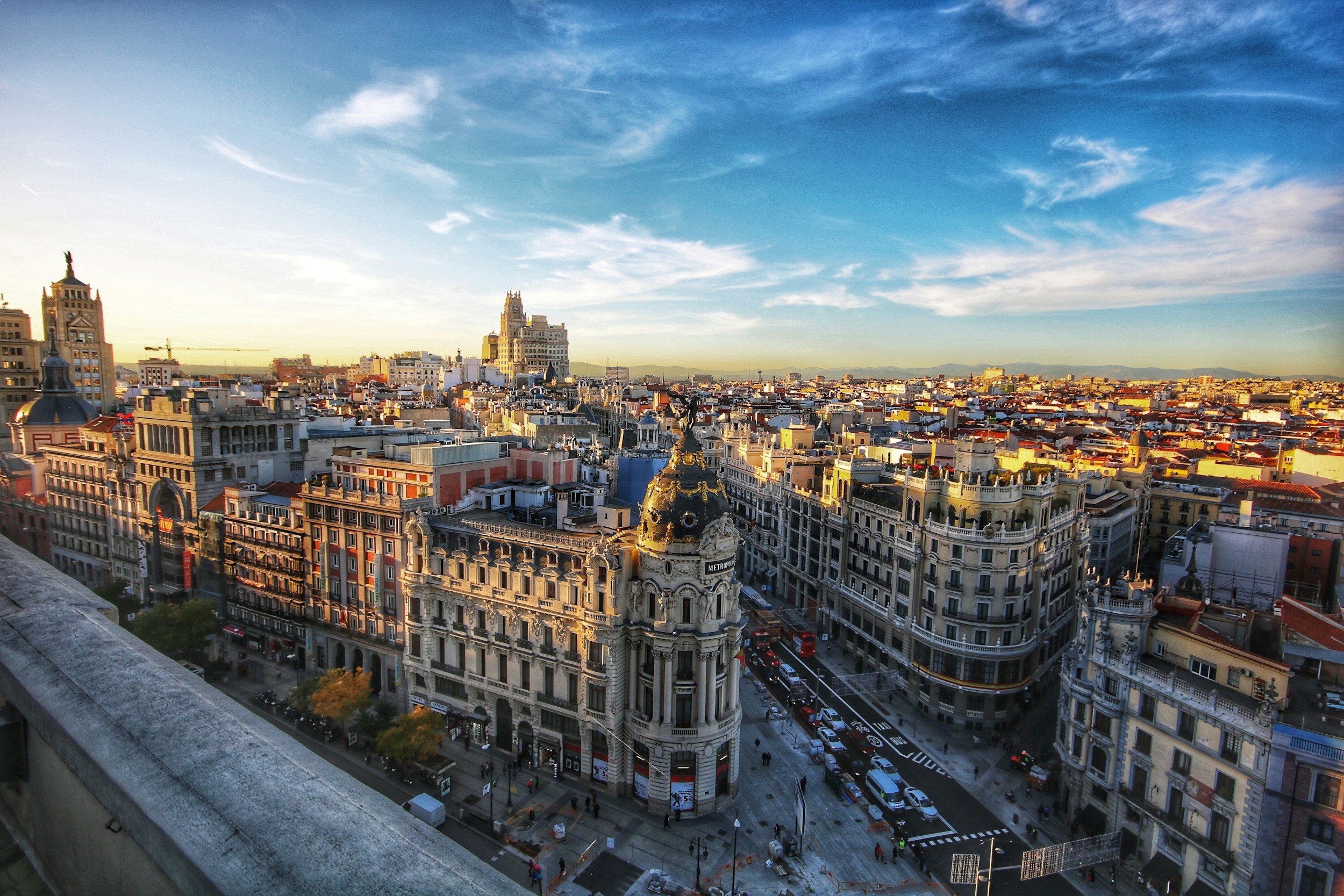
Madrid, Spain
Day 1 · Tuesday, May 25 - MADRID
International arrivals - Overnight in Madrid
Day 2 · Wednesday, May 26 - MADRID (B)
Free day in Madrid. Optional visit to the Museo Arqueológico Nacional (MAN) which is one of Spain's most prominent cultural institutions, founded in 1867. Among the museum's most outstanding pieces is the Lady of Elche, an impressive Iberian sculpture dating from the 5th century BC, famous for its detailed headdress and serene face. The museum also displays items from many of the cultures we will visit on our tour including Celtic-Iberian, Roman, Visigothic, Mozarabic, Romanesque and Gothic.
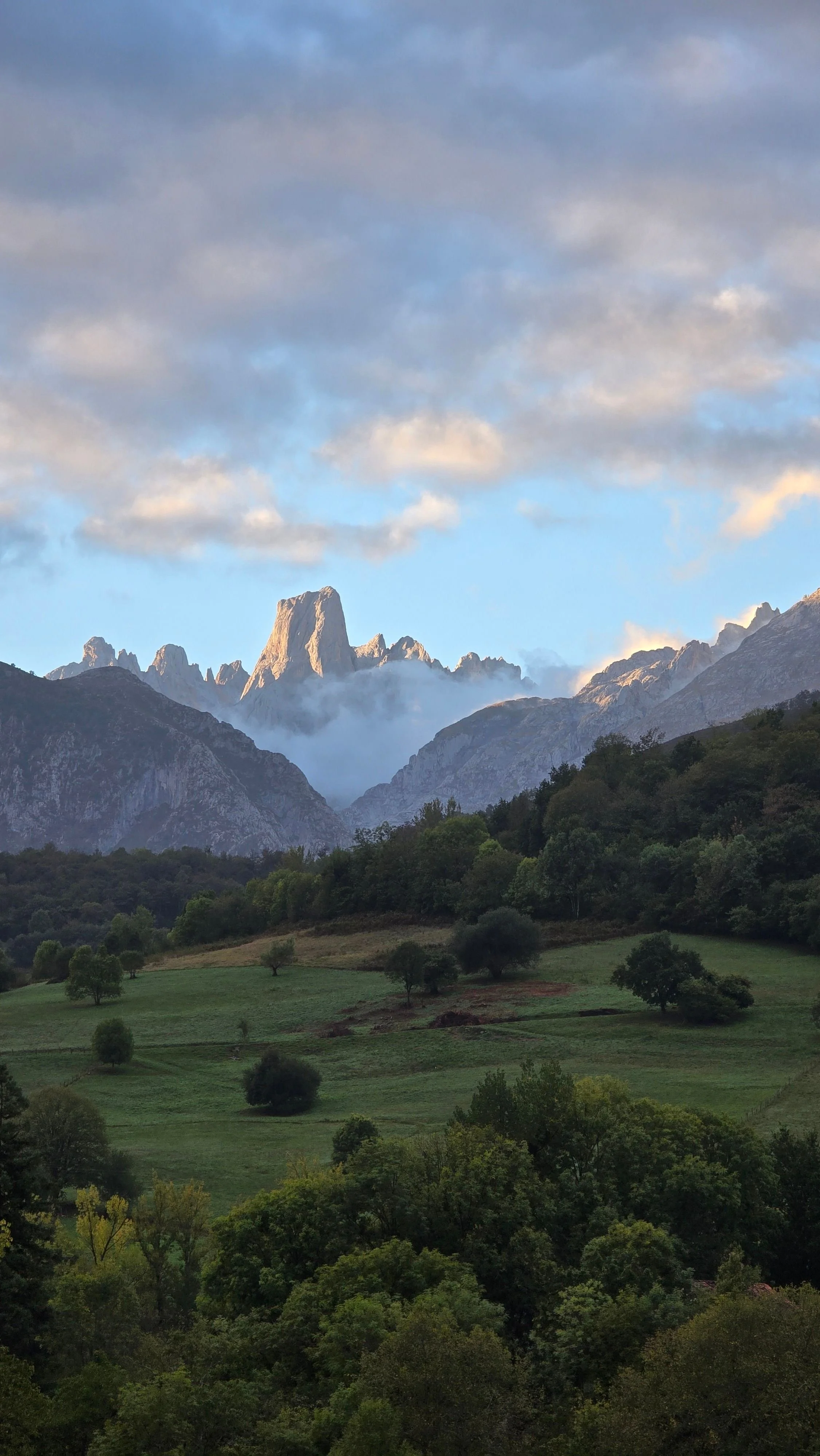
Picos de Europa
Day 3 · Thursday, May 27 - FUENTE DÉ (B) (L)
Our first day on the road, and the longest of the tour, departs Madrid to travel through Palencia to the village of Frómista, the first town we will visit on the Camino de Santiago. We will visit the important Romanesque church of San Martín de Tours, one of the purest and oldest to survive, full of exotically carved column capitals on the interior. After lunch we continue to the Parador de Fuente Dé which lies in the heart of the Picos de Europa National Park with stunning views.
Day 4 · Friday, May 28 - FUENTE DÉ (B)
Morning ride on the Teleférico. The line ascends 2,470 feet from3,576 feet to 6,070 feet. The trip, which does not have intermediate stops, lasts 3 min 40 sec. The length of the cable is 4,757 feet and the speed of cabins is usually 33 feet/second. The ropeway at Fuente Dé is the longest single-span aerial lift in Europe. A full day in nature for hiking, birdwatching or relaxing in this beautiful place. The Parador offers other optional activities. Lunch is on your own.
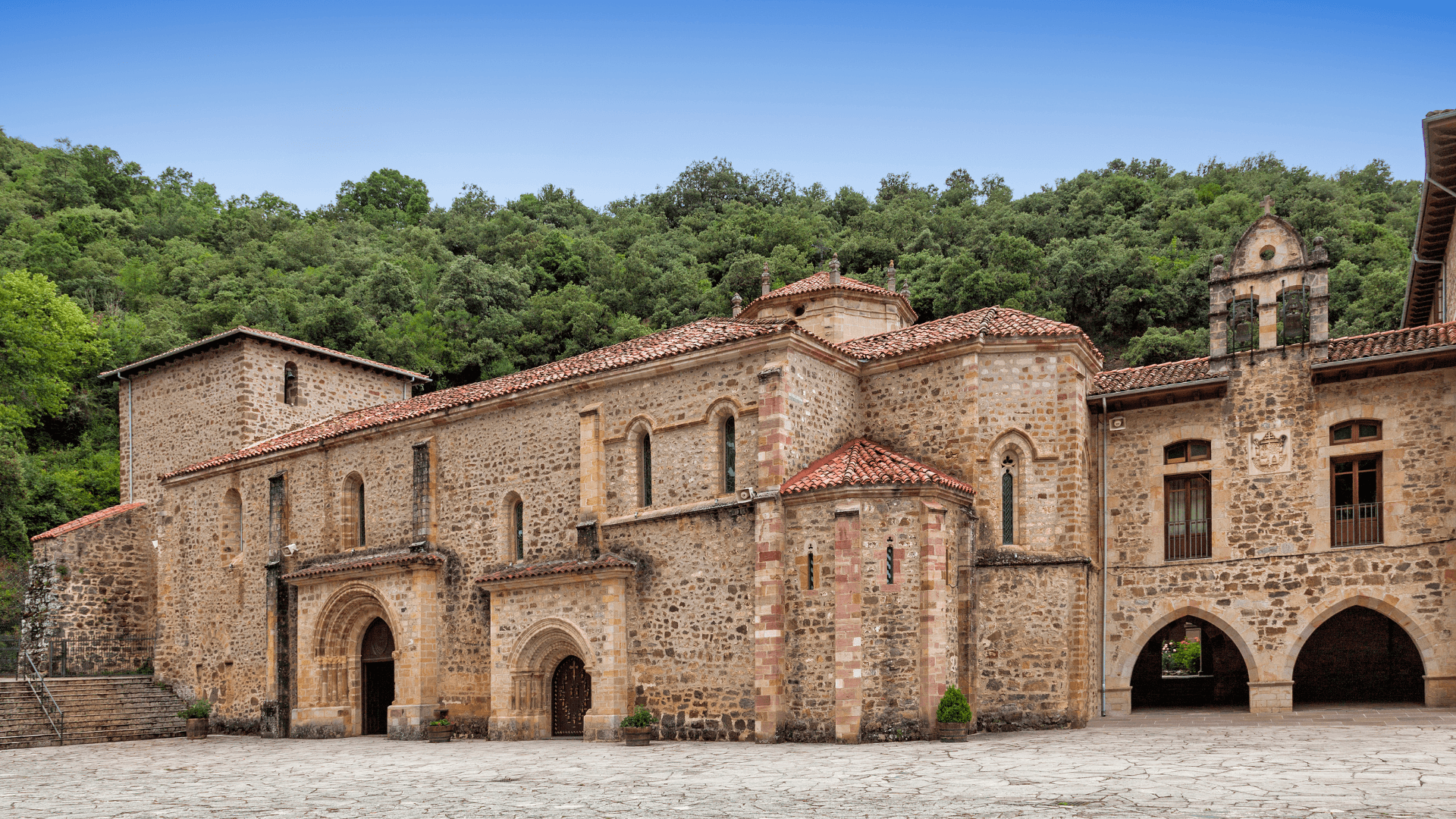
Franciscan Monasterio de Santo Toribio de Liébana
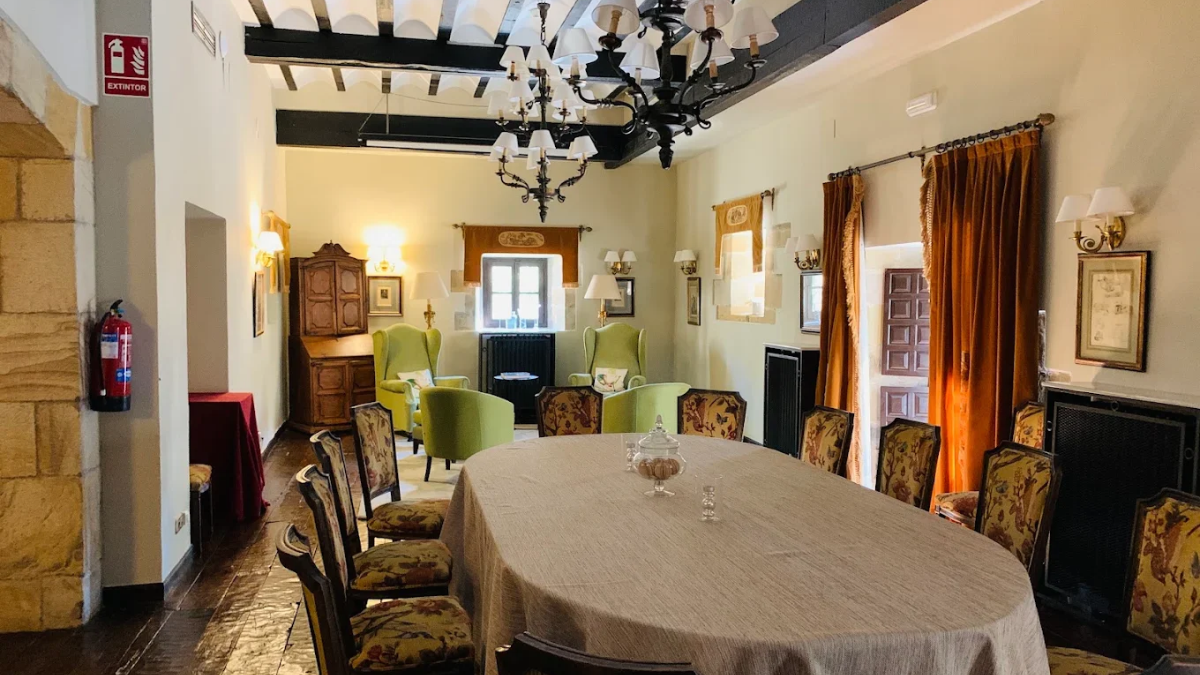
Bar & restaurant in the parador of Santillana Gil Blas set in a 17th-c. townhouse.
Day 6 · Sunday, May 30 - SANTILLANA DEL MAR (B) (L)
This morning we will go to the Tito Bustillo Centro de Arte Rupestre. The cave was inhabited by humans before 10,000 BC. Due to the collapse of the rock, the original entrance to the cave was sealed thousands of years ago, which preserved objects, tools and wall paintings that were discovered in 1968. Return to Santillana del Mar for an afternoon guided walking tour. Lunch is on your own.
Day 7 · Monday, May 31 - SANTILLANA DEL MAR (B) (L)
Drive into the mountains below the Picos de Europa to the village of Covadonga to see the famous Virgin and the battlefield where the first Christian victory against the Muslims took place in 718 or 722 led by Pelayo, marking the beginning of the Spanish Reconquest. We will also visit the interesting town of Cangas de Onís where we will have lunch at the Parador in the former monastery of San Pedro (begun in the 12th c) with views across the Sella River toward the other side of the Picos de Europa. We will visit the Chapel of Santa Cruz, founded in 735 on a Celtic tumulus and the Roman bridge over the Sella River.
Day 5 · Saturday, May 29 - SANTILLANA DEL MAR (B) (L)
Departure from Fuente Dé. A short distance away is the Franciscan Monasterio de Santo Toribio de Liébana that houses a purported piece of the True Cross. Located in the heart of the Liébana Valley, the Monastery stands as a silent witness to centuries of history and devotion. Its legacy dates to the 6th century, when Toribio, Bishop of Astorga, withdrew with some of his disciples to follow the Benedictine rule - the famous ora et labora - bringing with him the sacred relic that would change the destiny of the monastery. It is one of the oldest monasteries in Spain, famous for the gorgeous, illustrated manuscripts made here; we saw an 8th-c. one made here by Beatus de Liébana when we visited San Millan de Cogolla in 2025.
Our next short stop is at the Church of Santa María which is a Mozarabic (Christians under Muslim rule) church dating to the tenth century, founded by local Christian patrons and important for its early medieval architecture and long religious role in the Liébana valley. Continue to Santillana del Mar, a beautiful medieval town that grew up around the Romanesque Collegiate Church of Santa Juliana. Inside the church watch for the distinctive “chessboard” tilework, developed in Jaca and spread all along the Camino. Several defensive towers and Renaissance palaces -- most built by “indianos,” people who left for the Americas to make their fortune and returned to build these mansions -- make Santillana one of the most important historical sites in Cantabria. As a result, it was referred to as “the prettiest village in Spain” by Jean-Paul Sartre. Lunch will be on the way. We will stay in one of two paradors; ours is a modern building constructed in the local style, but the bar and restaurant are in the nearby parador of Santillana Gil Blas set in a 17th-c. townhouse. The restaurant is known for its cuisine in the local style.
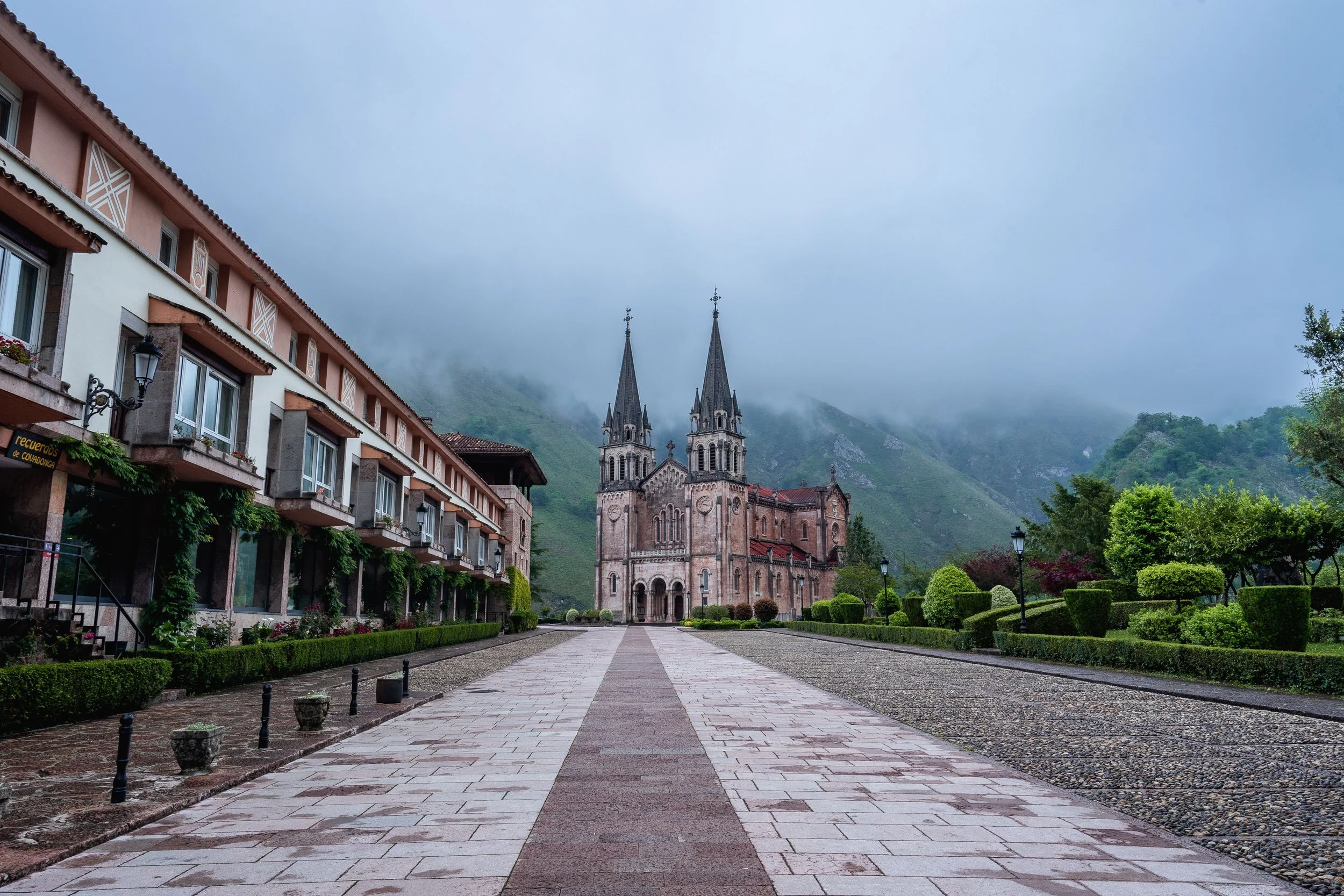
Stunning view of the Basilica of Covadonga
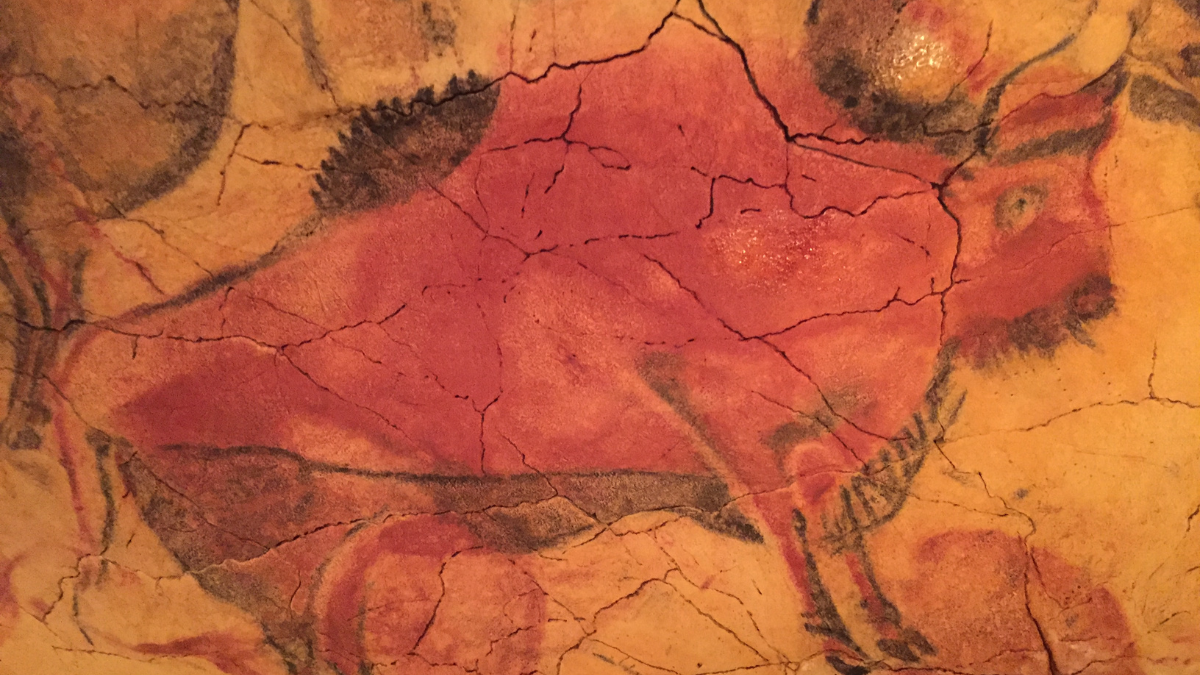
Prehistoric Bison Paintings in Altamira
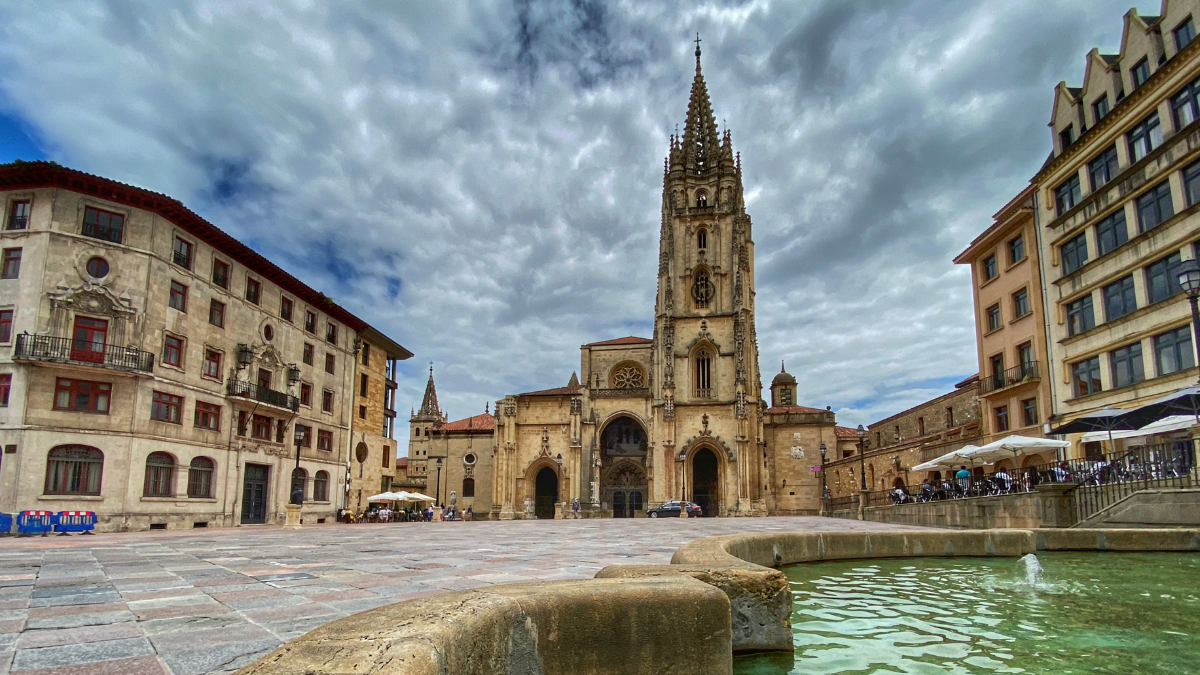
Flamboyant Gothic Cathedral in Oviedo
Day 8 · Tuesday, June 1 - OVIEDO (B) (L)
Depart for the Neocave Museo Nacional y Centro de Investigación de Altamira. Since the original cave is now closed to the public for conservation reasons, we will visit the Neocave, an exact three-dimensional replica of the actual cave which shows Altamira as it was between 35,000 and 13,000 years ago when it was inhabited by different groups of hunter-gatherers. The Neocave is filled with exact-to-scale replicas of the original prehistoric paintings of bison, horses, and deer. Also visit the on-site museum. Lunch will be on the way or in Oviedo.
Day 9 · Wednesday, June 2 - OVIEDO (B)
Morning walking tour of Oviedo. Caught between the mountains and the sea, Oviedo was founded as a fort in 757 to guard an important pass and became the capital of the Asturian Christian kings in 810. As a result, the heir to the throne of Spain is still called the Prince of Asturias (like the Prince of Wales). Oviedo is now a World Heritage Site. We will visit the Flamboyant Gothic Cathedral with the attached Holy Chapel containing many important early relics and sculptures influenced by ones by Master Mateo from Santiago. The rest of the day is free to enjoy this interesting town.
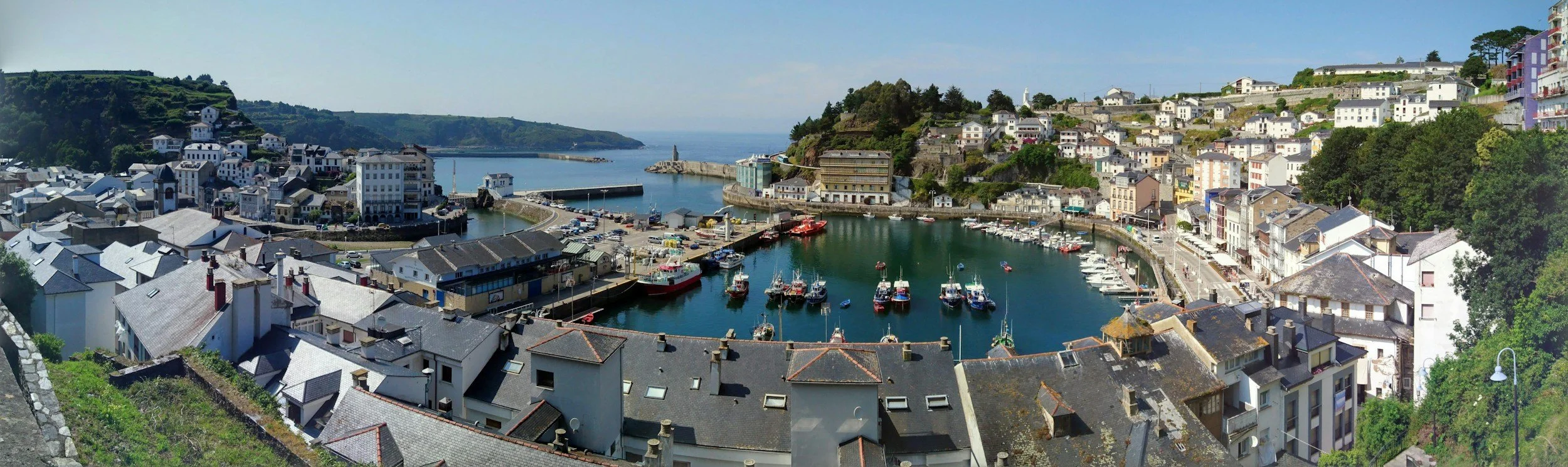
Luarca, Spain
Day 10 · Thursday, June 3 - LUGO (B) (L)
After departing from our hotel and only a few minutes away, we will stop at the Hill of Naranco, located on the edge of town. Here, two of the few remaining pre-Romanesque Visigothic churches are located, Santa Maria de Naranco (850 CE) and San Miguel de Lillo (848 CE). Some of you might remember them from Donna’s previous lectures.
After our visit we will travel along the dramatic Asturian coast to Luarca, a quiet town of white houses which preserves all the charm and attraction of its seafaring tradition. Its most characteristic buildings are the lighthouse, the chapel of Atalaya and the cemetery overlooking the sea, cut from the rock by pickaxe and the final resting place of the remains of the Nobel laureate Severo Ochoa, a native of this town. Luarca's Traditional character is reflected in its chigres, old Asturian taverns, where visitors can learn about the art of drinking cider. After our leisure lunch we will continue to Lugo.
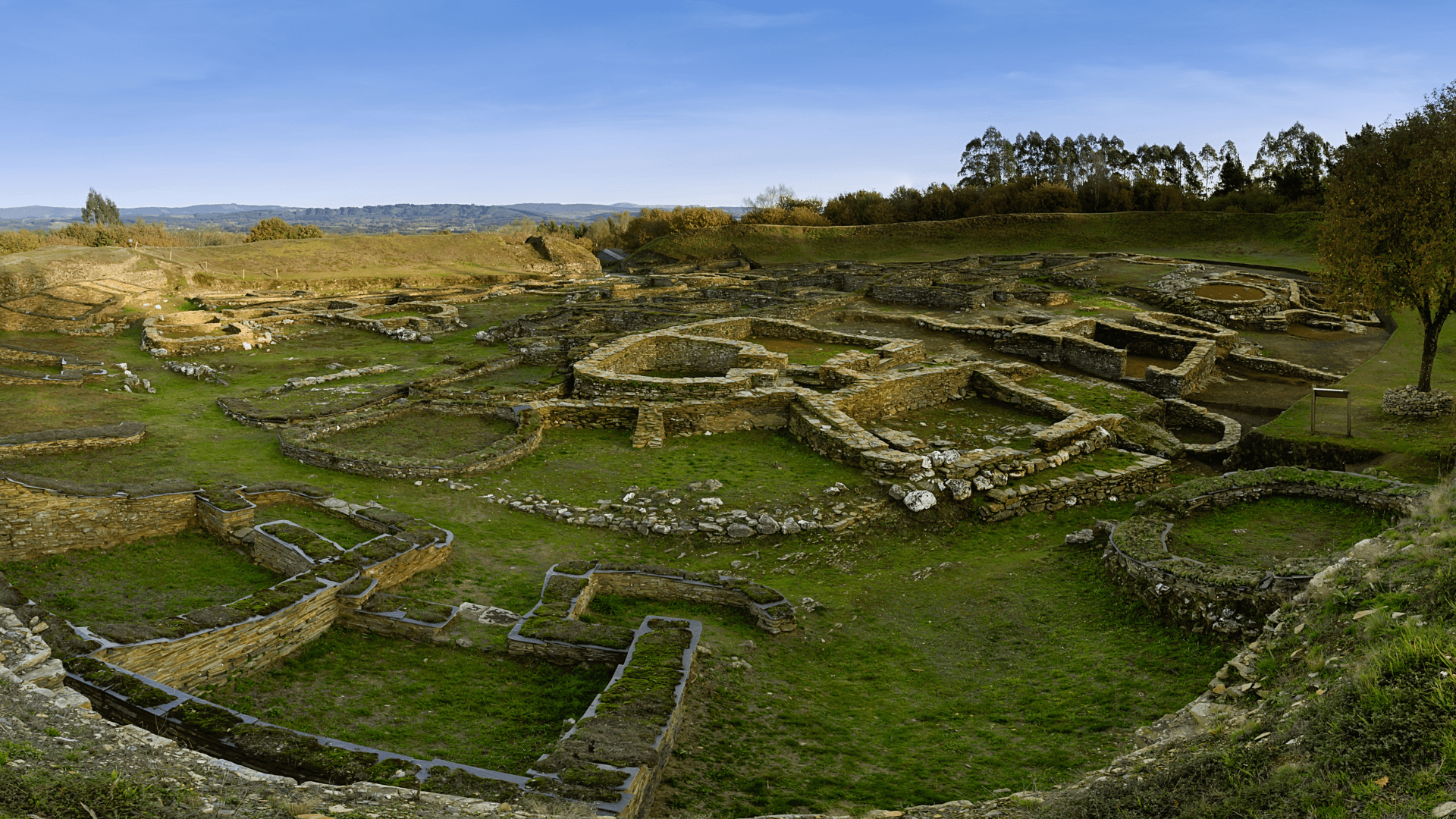
Castro de Viladonga
Day 14 · Monday, June 7 - SANTIAGO DE COMPOSTELA (B)
Morning walking tour of Santiago de Compostela. We will visit the spectacular Romanesque/Gothic/Baroque cathedral, begun in the late 800s to protect the gravesite of Saint James discovered here in 813. The town and church were razed to the ground by the Muslim ruler Almanzor in 997, leaving only the tomb intact. The present building was constructed between 1075 and 1128 and instigated the great flow of pilgrims that continues today. With its original façade carved by the great Master Mateo in the early Romanesque era (completed 1088) still extant behind the later Baroque façade, the exuberant Gothic interior contains the Baroque tomb of St James. Pilgrims can now climb the stairs behind the central altar to touch the large silver reliquary bust of St James. The attached museum houses a mix of objects from Goya tapestries to medieval reliquaries and early Renaissance silverwork, much imitated in the Americas. We will tour the plaza and other sites. Lunch on your own. The Santiago area is known for its abundance of the stone jet, or azabache in Spanish. As a result, jewelry made from jet is common in the shops around the plaza. Afternoon free.
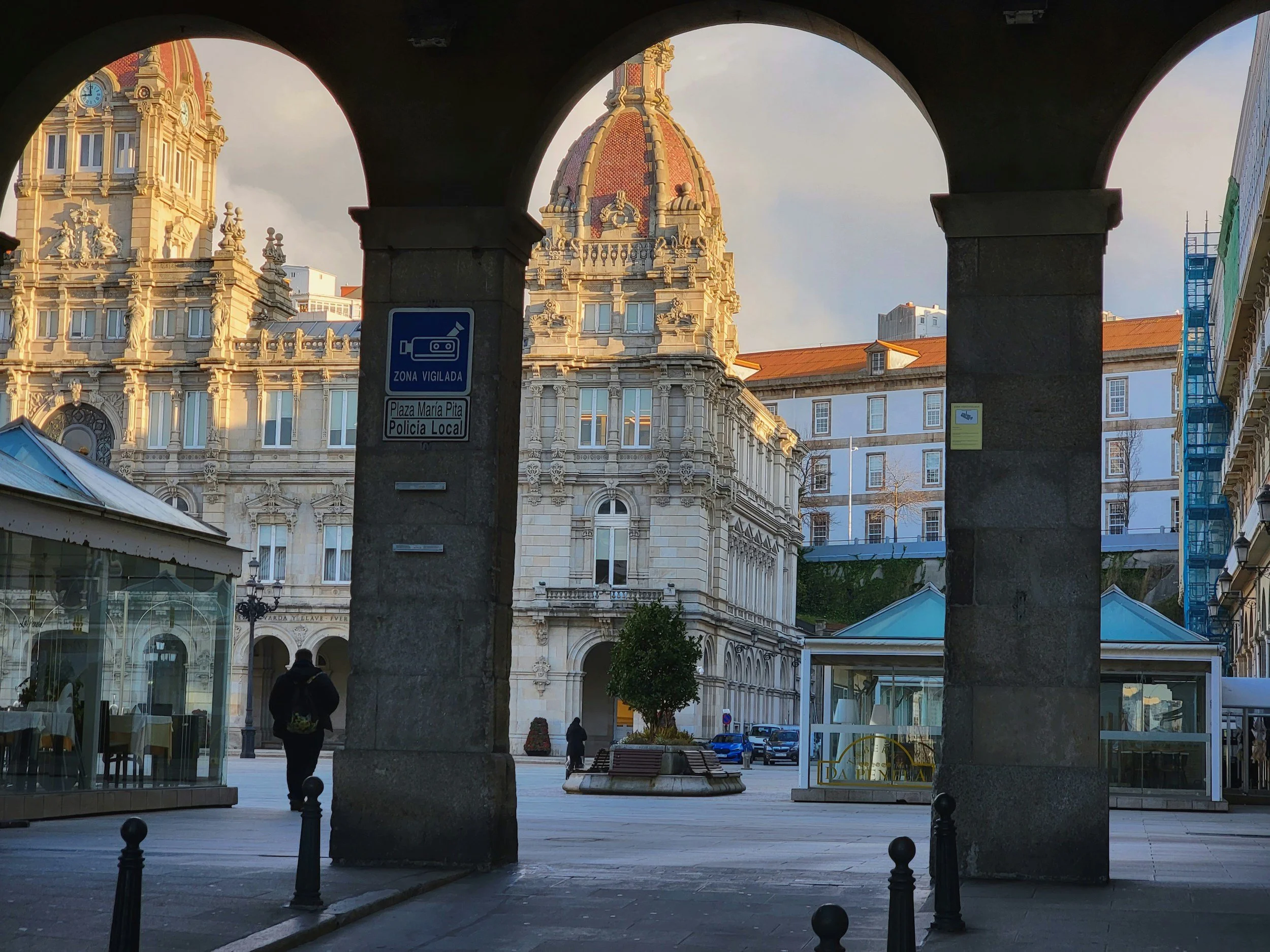
A Coruña
Day 11 · Friday, June 4 - LUGO (B)
Lugo is the oldest city in Galicia and is situated on the Camino de Santiago. Founded by Celtic inhabitants, it was later the most important Roman town situated near a profitable gold mine. Morning walking tour including the Romanesque/Gothic cathedral (1129) with its English Virgin brought from St Paul’s in London in the 16th century. The Roman Walls of Lugo date from the 3rd and 4th centuries AD and they are the most complete and best-preserved examples of Roman military architecture in the Western Roman Empire. After our walking tour, we will have a free afternoon to enjoy this lovely town. Optional sunset walk of the massive 10-meter-tall Roman walls surrounding the old center followed by a tapas crawl around the small town.
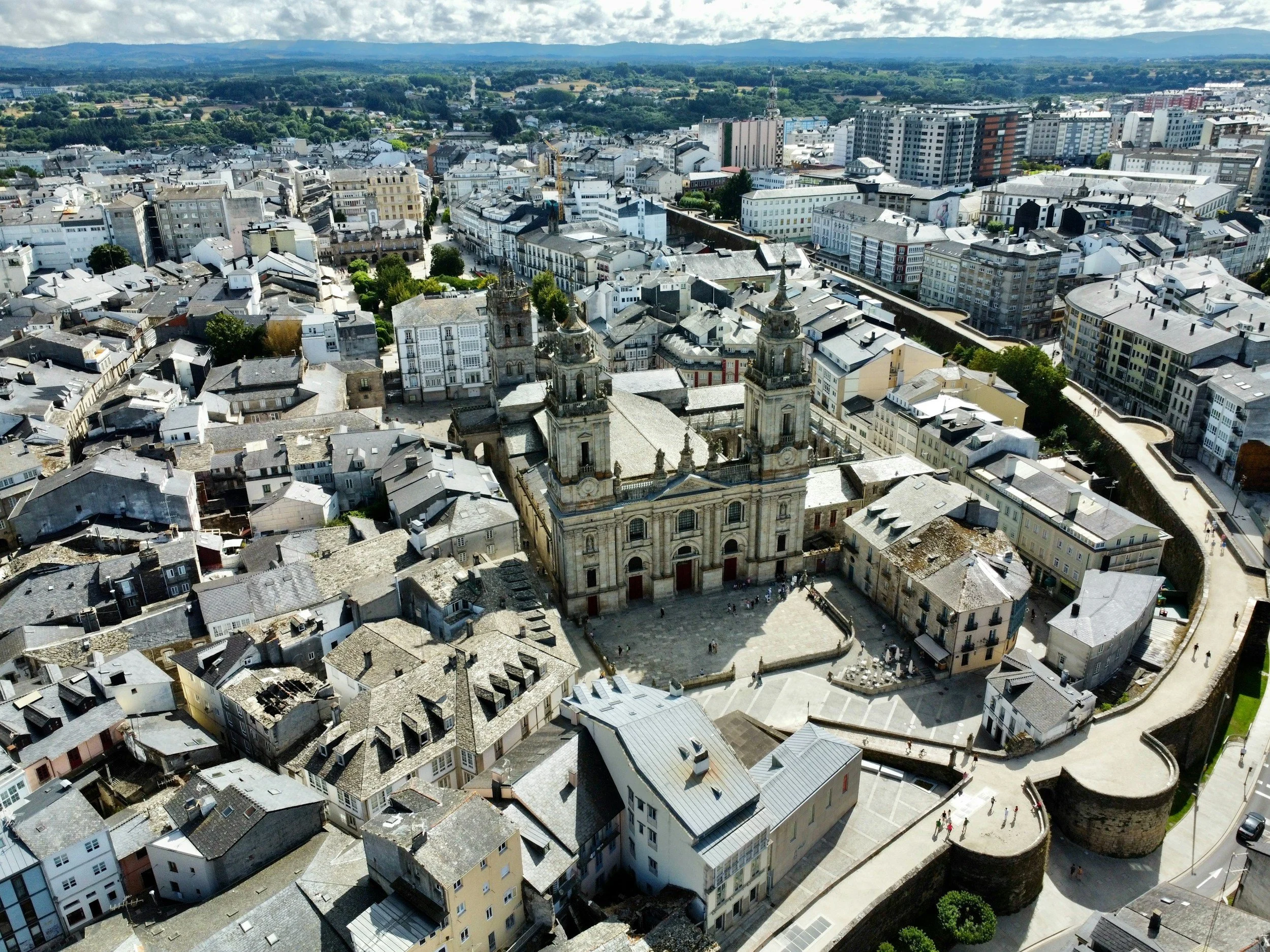
Lugo, Spain
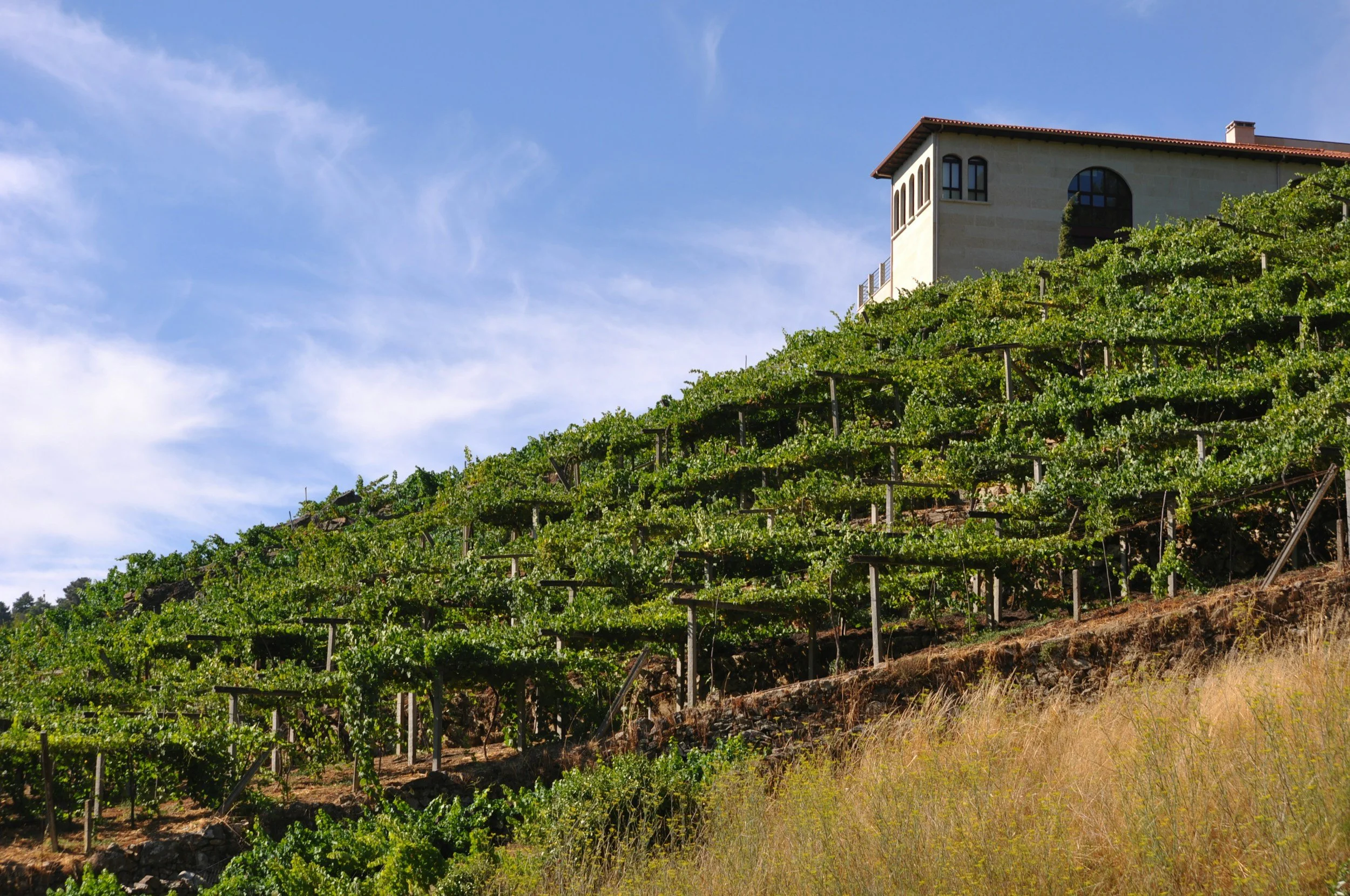
Lugo, Spain
Ribeira Sacra
Day 13 · Sunday, June 6 - SANTIAGO DE COMPOSTELA (B) (L)
After checking out we travel a short distance northeast of Lugo to visit the Gallaecian-Roman hillfort of Castro de Viladonga where we will visit the site and its museum. The castro was occupied from the 2nd to the 5th century CE. We continue west to visit the Monastery of Vilar de Donas with its late Romanesque frescoes and elaborately carved tombs of Knights of Santiago. Not far from the British Isles by boat, Galicia was settled by Celts in the 6th century, and their influence is still felt in the traditional bagpipe music, kilts, granite crosses and folk legends of the area. Upon arrival we will have lunch at the Parador before checking into the magnificent early Renaissance parador located adjacent to the great Cathedral of Santiago.
Day 12 · Saturday, June 5 - LUGO (B)
We go deep into the mountains to meet the people who believe that the Ribeira Sacra is one of the most extraordinary wine landscapes in the world. Since 1979, this family-owned wine producer has been striving to restore historic vineyards, slate soils, and centuries-old terraces which celebrate the diversity of the vines. Beyond Mencía, they cultivate and craft wines from Merenzao, Brancellao, Sousón, Caíño, Godello, Treixadura, and other native varieties that enrich the region’s identity. On our full day here, we will enjoy a guided boat trip along the Sil River where we will learn the history of the Ribeira Sacra, the area's winemaking traditions, and how they cultivate on the steep slopes that characterize heroic viticulture. We will have a tasting of 3 of their wines and enjoy lunch in this beautiful place.
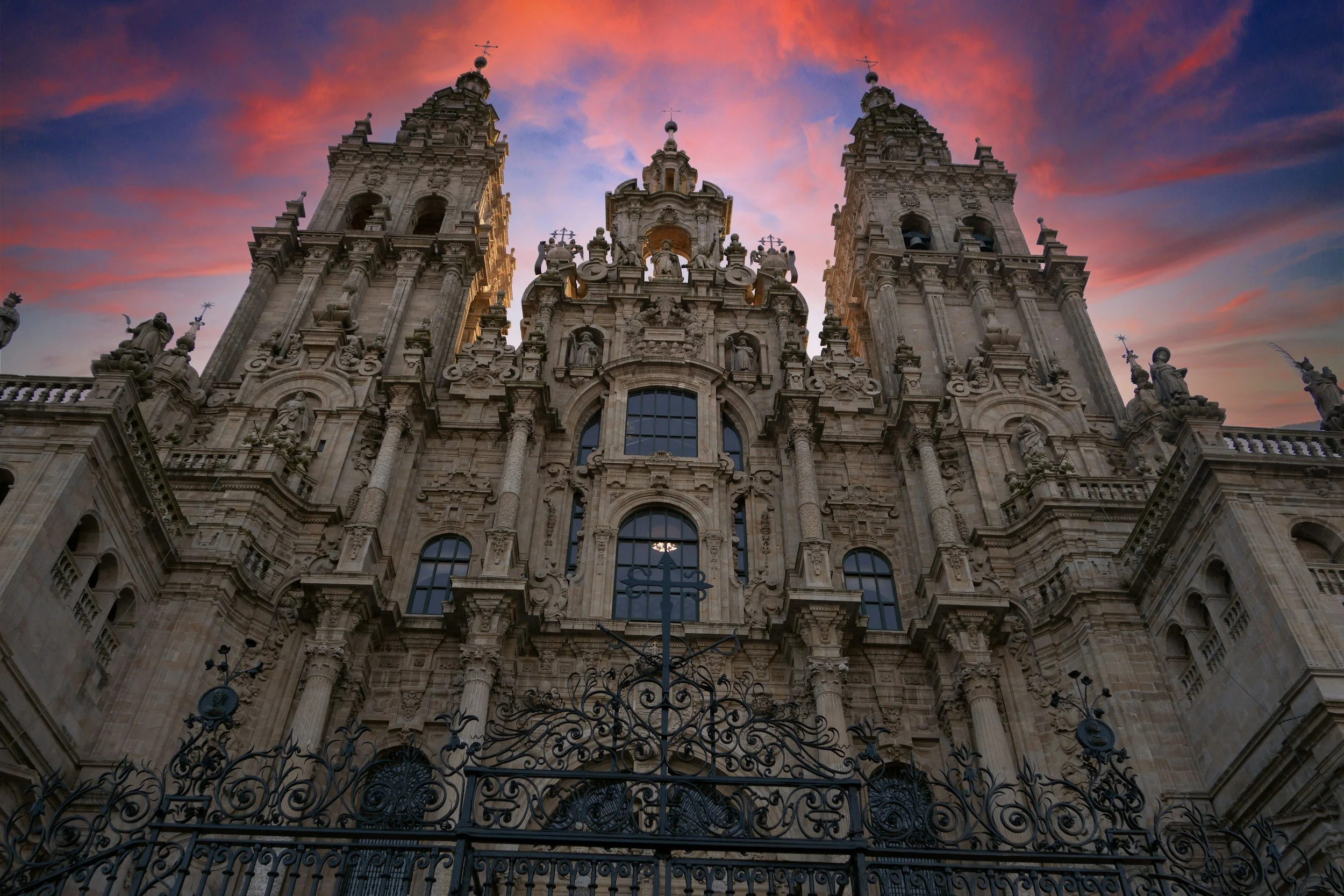
Cathedral at Santiago de Compostela
Day 15 · Tuesday, June 8 - SANTIAGO DE COMPOSTELA (B)
Spend morning in the port city of A Coruña. In 1588, the Spanish Armada left from A Coruña to attack England; a year later Elizabeth I sent Francis Drake to burn A Coruña in retaliation, but the town was warned by a local woman. We will visit the Roman Torre de Hercules lighthouse, the oldest functioning lighthouse in the world (the inside is currently inaccessible to visitors). After a group lunch we will continue to Betanzos for a walking tour. Originally the site of a Celtic settlement and a major Roman port until it silted up in the 18th century, it remains a charming town with steep streets and three 14th-century churches. Return to Santiago.
Day 16 · Wednesday, June 9 - SANTIAGO DE COMPOSTELA (B)
Check out and travel on the RENFE AVE train from Santiago de Compostela to Madrid. The journey takes three hours. Upon arrival we will be taken to our hotel.
Day 17 - Thursday, June 10 - International departures
Hotels:
Madrid
Hotel Catalonia Atocha
May 25 - 26
Fuente Dé
Parador de Fuente Dé
May 27 - May 28
Santillana del Mar
Parador de Santillana Altamira
May 29 - 31
Oviedo
Eurostars Hotel de la Reconquista
June 1 - June 2
Lugo
Eurostars Gran Hotel Lugo
June 3 - June 5
Santiago de Compostela
Parador Hostal dos Reis Católicos
June 6 - June 8
Madrid
Meliá Madrid Barajas Hotel
June 9
Tour Cost:
Double Occupancy $6,859.00 per person
Single Occupancy (In a double room) $1,936.00
NOTES
The tour will include lectures by Dr. Donna Pierce Smith. It is possible that changes may affect the above itinerary and activities. If so, whatever is altered will be replaced by its equivalent. Price is subject to change due to currency exchange fluctuations or especially fuel surcharges.
Program Information
INCLUDED:
• All accommodations
• Breakfast daily and 8 lunches
• Transportation throughout by chartered bus
• Entrance fees to all sites indicated in the itinerary
NOT INCLUDED:
• International air fare
• Tips to drivers and guides, please remember to tip the room attendants
Rosa Ramírez Carlson, owner of Journeys International, Inc. is handling all land arrangements.
HOW TO REGISTER FOR THIS TOUR:
Please contact Rosa Carlson to confirm your participation. Space is limited and reservations are accepted on a first come, first served basis. Write to: info@journeys-international.com or carlsonrosa@hotmail.com or call: 505-310-1863
Please return the following documents to the mailing address listed below:
• Booking and Release Form per person
• Readable photocopy of your passport
• Your deposit check made out to Journeys International, Inc.
MAILING ADDRESS:
JOURNEYS INTERNATIONAL, INC.
49 Verano Loop
Santa Fe, New Mexico 87508
DEPOSIT
A deposit of $1,000.00 per person is due to reserve your space. No credit cards accepted.
FINAL PAYMENT IS DUE ON NOVEMBER 5, 2026
CANCELLATION PENALTY
• After deposit $1,000.00 is non-refundable
• After November 5, 2026 100% is non refundable
Important: Purchase of trip cancellation insurance is strongly recommended. If you have any pre-existing conditions for which you would like coverage, most companies require that you must purchase the insurance within 14 days of your first payment for the tour. You may be able to purchase coverage just for your deposit amount and later increase your coverage when the final payment is made. In addition, many health insurers, including Medicare, do not provide coverage for insured people traveling abroad. Affordable health insurance for overseas travelers is readily available with companies such as Geo Blue, Medex, Travel Guard, Allianz Travel Insurance and similar companies.
ADDITIONAL INFORMATION
Prior to departure, you will receive complete information about the tour. An introduction and orientation meeting will be scheduled prior to the tour departure.